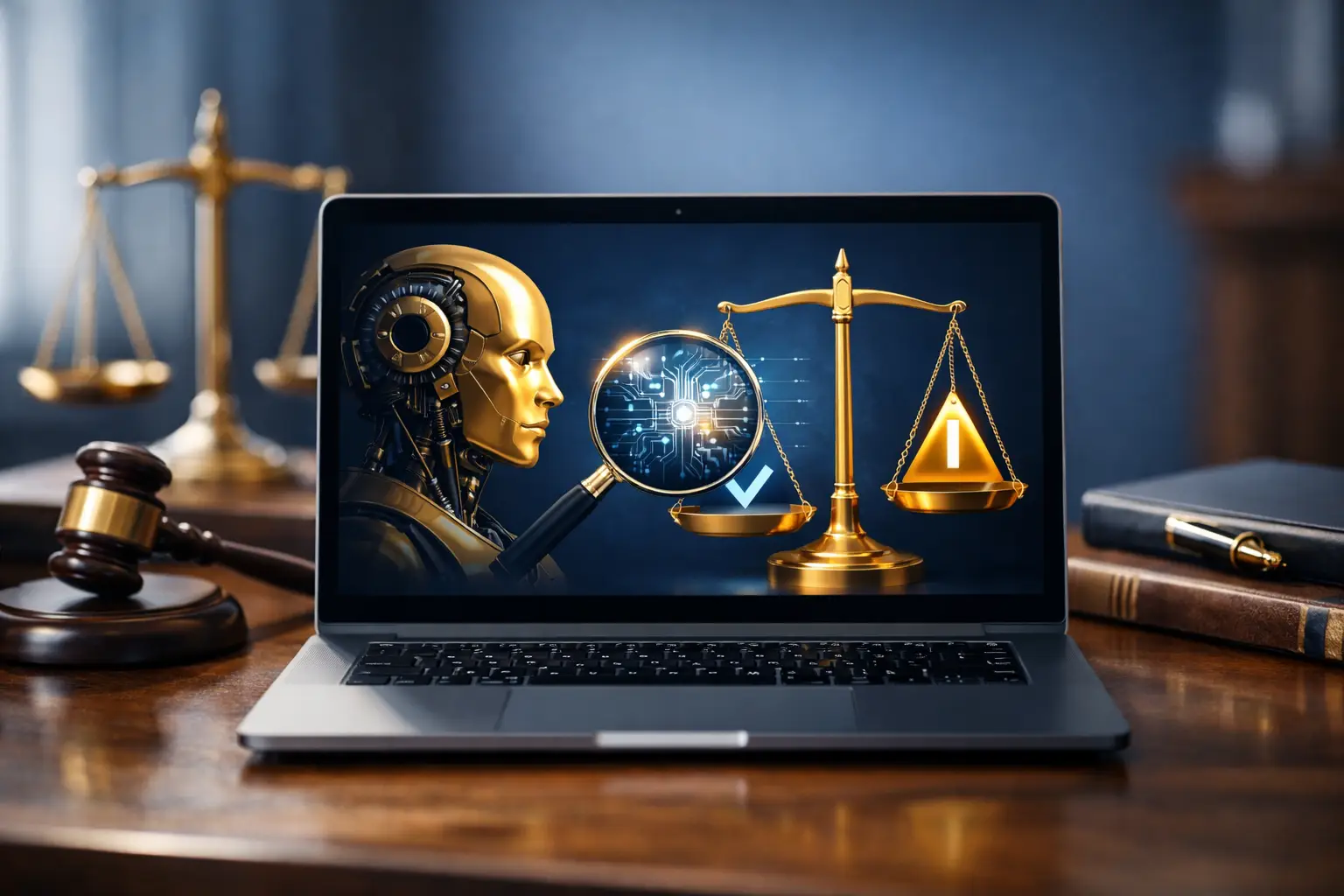
Not Your Typical AI: How CaseOdds.ai Removes Bias from Legal Predictions
If you've used ChatGPT or any consumer AI lately, you've probably noticed something: these tools really, really want you to be right. Ask them about your legal case and they'll often validate your framing, soften bad news, and produce a confident-sounding answer that may have very little to do with how a real judge would rule.
That's a problem. When the stakes are a verdict, a settlement, or your livelihood, you don't need a cheerleader. You need a brutally honest second opinion. That's exactly what we built CaseOdds.ai to deliver - and the way we built it is fundamentally different from a typical AI chatbot.
The Sycophancy Problem in Consumer AI
Large language models are trained, in part, using human feedback. Reviewers reward responses that feel helpful, agreeable, and confident. Over millions of training examples, this creates a powerful bias: the model learns that pleasing the user is the path to a high score.
For casual questions, this is harmless. For legal analysis, it's dangerous. A plaintiff who describes their case in glowing terms gets a glowing overview. A defendant who frames the facts defensively gets reassurance. Same dispute, two opposite "reports" - depending entirely on who's typing.
How We Engineer the Bias Out
CaseOdds.ai isn't a chatbot with a legal coat of paint. It's a purpose-built analysis pipeline designed by people who understand both modern AI and how courts actually decide cases. Three principles guide everything we do:
1. We Ask the Right Questions
Our prompts are engineered, tested, and continuously refined to surface the facts a judge would care about - not the ones a user wants to highlight. We deliberately probe weaknesses, request opposing facts, and force the model to argue against the user's position before forming any conclusion.
This is the same discipline a senior litigator uses when prepping a case: assume your client is leaving out the inconvenient details, and dig until you find them.
2. Adversarial Cross-Examination
Before any report is generated, your situation is run through an adversarial step: the system constructs the strongest possible argument for the opposing side. Only after that opposing case has been built and stress-tested do we evaluate which side a court is more likely to favor.
This eliminates one of the most common failure modes of AI legal tools - confirming whatever narrative the user provides. If your case has a fatal weakness, we want to find it now, not after you've spent $20,000 on filings.
3. Multi-Model Consensus
No single AI model is right all the time. Different models have different blind spots, different training data, and different tendencies. So we don't rely on just one. Your case is analyzed by several leading frontier models in parallel, each reasoning independently.
We then compare their outputs, measure agreement, and surface the report with the highest cross-model confidence. When the models disagree, we tell you - because uncertainty is itself a critical piece of information.
Why This Matters for Your Decision
A confident wrong answer is worse than no answer at all. It can push you into litigation you should have settled, or into a settlement you should have fought. The whole point of getting a prediction is to make a better decision - and that requires a prediction you can actually trust.
Our approach trades the warm-and-fuzzy feeling of an agreeable AI for something more valuable: a report that has been challenged, cross-examined, and validated across multiple independent models before it ever reaches your screen.
What You Get
- An unbiased report - not shaped by how you framed your case
- The opposing argument - so you know exactly what you're up against
- A confidence score - based on agreement across multiple models
- The key factors - what's actually driving the prediction, in plain English
Built by Experts, for Real Decisions
CaseOdds.ai exists because the people building it got tired of watching others rely on AI tools that prioritize feeling good over being right. We'd rather tell you a hard truth today than let you discover it in a courtroom next year.
That's what makes us not your typical AI - and why thousands of users trust us before they trust their gut.